Overview
Are you also experiencing severe tooth pain or sensitivity while eating sweets or ice cream? These can be early signs of tooth decay also called dental cavities, which affect both children as well as adults, and for avoiding complications if diagnosed early it can be treated.
This blog will guide you about what tooth decay is, its symptoms, causes of cavities, how you can prevent cavities and if there are any home remedies for tooth decay.
What is Tooth Decay?
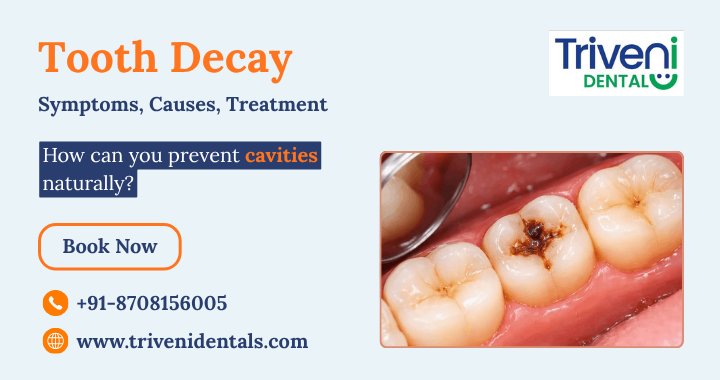
When the enamel (outer layer) of the tooth gradually wears down due to the acid produced by bacteria in your mouth. These bacteria formed due to sweets left in your mouth and cause cavities (holes in teeth). Tooth decay is also called dental caries.
Common Tooth Decay Symptoms
Generally people don't realise they have got cavities until the pain starts. Below are some of the early signs of tooth decay (cavities):
a) Extreme sensitivity on consumption of hot, cold and sugary items
b) Bad breath or foul taste in your mouth
c) Toothache without any specific reason
d) Black or brown spots in teeth
e) Having small hole in teeth where food stucks
f) Discomfort while chewing food
If you are noticing any of the above signs, then don’t wait for cavities to become worse and schedule your dental checkup as early as possible.
Tooth Decay Causes
If you understand the causes of tooth decay then it will protect your teeth. Common causes of tooth decay(cavities):
1. Too much consumption of sugary items and drinks
2. Improper brushing & flossing habits
3. Building up plaque on teeth and gum recession
4. Dry mouth
5. Snacking repeatedly throughout the day
6. Family history of tooth decay
These factors help bacteria to produce acid that damages your teeth outer part i.e. enamel.
Tooth Decay Stages: How Cavity Progress?
A deep cavity doesn’t form in a day, these progress over time. Below are the 5 main tooth decay stages:
1. Demineralisation
At the first stage you will observe small white colour spots on your teeth, occurring due to breakdown of minerals in your teeth enamel.
2. Enamel Decay
As tooth decay is left untreated it will progress white spots will convert into light brownish colour and your enamel will continue breaking down causing cavity (holes) in teeth.
3. Dentin Decay
Dentin is a soft layer present beneath the tooth enamel, when bacteria reach this layer, cavities start progressing causing sensitivity and dark brown spots on teeth.
4. Pulp Infection
Tooth pulp is the innermost layer of teeth containing nerves and blood vessels, when cavity reaches to it, causing severe tooth pain and redness or swelling in gums.
5. Abscess
When cavity left untreated causing infection and subsequently lead to pus formation. This pus will cause intense pain and swelling.
Tooth Decay Treatment
Are you also wondering how you can get rid of tooth decay? Tooth Decay treatment depends on severity of condition. Tooth Decay treatment includes:
1. Fluoride
Fluoride treatment will help in very early stages of cavity to repair the damaged enamel before the cavity formation.
These are recommended when a hole is formed in teeth, the dentist will clean out the decayed tissue and fill it with composite or other filling material.
This is recommended by the dentist when the tooth decay reaches the pulp, then they will perform RCT on your teeth to remove infected pulp, clean the cabal and seal with crown for protection.
If the natural tooth can’t be saved by root canal treatment, then tooth extraction is advised, followed by treatment like dental implant or dental bridge.
How can you prevent Tooth Decay (Cavities)?
To avoid tooth decay or prevention of cavities you can follow below tips:
a) Brush two times per day with fluoride toothpaste
b) Floss every day to remove the stuck food between teeth
c) Limit your consumption of sugary snacks and cold drinks
d) Visit your dentist after every six months
e) Get clean your teeth professionally
Tooth Decay Treatment in Bhiwani at Triveni Dental
If you are looking for tooth decay or cavities treatment in Bhiwani, then your search ends here.
At Triveni Dental we provide treatment for cavities from early stage to deep cavity, it included fluoride therapy, root canal treatment, dental filling, extraction from the experienced dentists.
Conclusion
Tooth decay or cavities are a common problem and treatable when detected at early stages. So if you have any symptoms like black spots on teeth, tooth pain or sensitivity, consult your dentist and get your cavity treated.
But if looking for teeth cavity treatment in Bhiwani, choose Triveni Dental and get treatment from experienced dentists.
FAQ
1. Is tooth decay reversible?
When the enamel is not damaged too much it can be reversed with proper oral hygiene and fluoride treatment but if the cavity is too deep it requires other dental treatment.
2. Is it possible to remove tooth decay with home remedies?
No. Home remedies can give you a short term relief but can't heal or remove cavities permanently and if the cavity is deep it requires professional dental treatment.
3. Which type of foods increase the risk of cavities?
Foods like sugar, sweet foods, cold drinks, and candies increase the risk of tooth decay.
4. How do I know I have tooth decay?
Simple symptoms like tooth sensitivity, dark spots on teeth, pain during eating, visible holes are the indication of cavities.
5. Does every cavity need root canal treatment?
No, cavity treatment depends on severity of condition, if it is not deep it can be treated with dental filling. Root canal treatment is required only if tooth decay reaches tooth pulp.
6. How often should I visit the dentist to decrease the chance of tooth decay?
Dental check in routine after every six months are recommended to detect cavities early and prepare your good oral health.