Overview
So your dentist just told you that your tooth needs "root canal treatment or extraction," and now you're sitting there Googling at 11 PM trying to figure out which one will be a better choice for you. Sound familiar? You're not alone. This is one of the most common dilemmas patients face, and honestly, most people make the decision based on the wrong things — fear of pain, fear of cost, or just wanting the "quick fix."
So now let's discuss it thoroughly and help you in figuring out which is better for you Root Canal or Tooth Removal.
First, What's Actually Happening in Your Mouth
When a tooth is infected or badly decayed, you have two options: remove it with tooth extraction or just save it with a root canal. Both treatments are applied by dentists but which one is right for you will depend on:
a) The tooth location and how much it contribute to bite
b) How much it is affected from infection or decayed
c) Overall oral health and long term health effect
Below is a breakdown of what is tooth extraction and root canal:
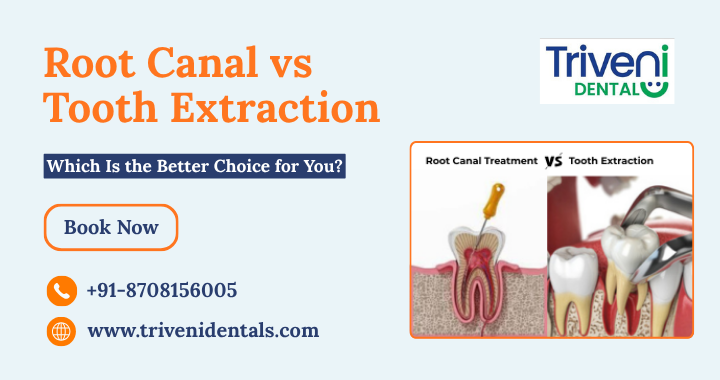
1. Root Canal Treatment (RCT): In this procedure infected pulp is removed, then the canal will be cleaned out and filled with a material then sealed with a tooth cap to provide strength to the tooth.
2. Tooth Extraction: This procedure involves removing the infected or decayed tooth from its socket in the jawbone and leaving a gap.
Root Canal vs Tooth Extraction: Which is more painful?
Let's kill this myth right now: root canals do not hurt more than extractions. In fact, most people report that a root canal feels pretty similar to getting a regular filling. You're numbed up the whole time, and modern techniques have come a long way from the horror stories your uncle probably told you.
Below is a comparison for both the treatments:
a) During the procedure: both are done under local anesthesia, so pain in the moment is minimal either way
b) First couple of days after: extraction tends to heal a bit faster initially
c) Long-term comfort: root canals usually win here, as it saves your natural tooth and enhances your chewing ability.
d) Overall verdict: it's basically a wash — both involve some soreness afterward, and neither is the nightmare people imagine
So if pain is your deciding factor, don't let it be. Look at the other factors instead.
Root Canal vs Extraction: Pros and Cons
Now let’s breakdown the real pros and cons of tooth extraction and root canal:
Root Canal — The Pros and Cons:
Pros:
a) Save your natural tooth while restoring your chewing ability and even your jaw alignment will stay proper.
b) Leave no gap after treatment.
c) No need for costly treatment like dental implant or bridge as no gap is left.
Cons:
a) Require more than one sitting and later for crown placement.
b) More costly than simple tooth extraction.
c) Sometimes RCT may fail.
Tooth Extraction — The Pros and Cons:
Pros:
a) Tooth removal is a quick procedure and done generally in single visit
b) Less costly comparing to Root canal
c) Instant relief from the problem
Cons:
a) Leaving gap after treatment which need to be fixed by another treatment like dental implant, bridge
b) Post extraction treatment to fill the gap are far way costly than Root Canal
c) Causing bone loss and reduce chewing ability
Is Root Canal Better than Extraction?
In most cases where the tooth can actually be saved — yes, dentists generally recommend root canal treatment over extraction. Why?
Because nothing replaces your natural tooth, even though dental implants and bridges are great modern solutions, they're still replacements, not originals. Your bite feels different, your jawbone can start to shrink without the root stimulating it, and the total cost over your lifetime — implant, crown, maintenance — often ends up higher than just fixing the tooth in the first place.
That said, extraction becomes the smarter choice when the tooth is severely fractured, has extensive bone loss around it, or the infection has spread too far for a root canal to reasonably fix. There's no shame in extraction when it's genuinely the better option — the goal isn't "save every tooth no matter what," it's "make the choice that serves your long-term oral health."
Tooth Extraction vs Root Canal Cost
This is usually where the decision gets tricky.
A simple extraction is generally cheaper upfront than a root canal treatment. But here's the catch nobody mentions enough: extraction is rarely the end of the story. Once the tooth is gone, you'll likely need a replacement to prevent shifting teeth, bite problems, and bone loss — and that replacement (implant or bridge) usually costs significantly more than the root canal would have.
So when people compare costs, they're often comparing "extraction only" to "root canal plus crown," which isn't really a fair comparison. If you factor in eventual replacement costs after extraction, saving the natural tooth with a root canal is frequently the more economical choice in the long run.
So, which should you choose?
Honestly? Talk to your dentist and ask them directly: "Can this tooth realistically be saved?" If the answer is yes, and you're not dealing with major structural damage, saving the natural tooth is usually worth it. Your natural tooth is irreplaceable technology — no implant fully replicates it.
At Triveni Dental, we always start by evaluating whether your tooth is a good candidate for saving before jumping to extraction. We believe in giving you all the facts — pain levels, costs, long-term outcomes — so you're making an informed decision, not a scared one.
FAQs
1. Is it true root canal is more painful than a tooth extraction?
No, both the procedures are done under local anesthesia because of which pain is very low but if we compare post procedure soreness it is felt for a little bit more in the root canal.
2. Which is better root canal treatment or tooth extraction?
If the tooth is not too infected or decayed then it is better to save it through the root canal as it will enhance chewing ability and overall oral health.
3. Which is more costly: root canal or tooth extraction?
Root canal looks more costly in starting compared to simple tooth extraction but cost of replacing missing teeth after tooth extraction is more which make RCT look economical.
4. Can we save every tooth with a root canal?
No the tooth which is severely infected, decayed or broken then it can’t be saved with root canal and tooth extraction is a good choice.
5. Is it necessary to replace a missing tooth after extraction?
Yes, as leaving a gap after tooth extraction will cause bite issues and jawbone loss, that’s why dentists recommend dental implant, bridge or denture.