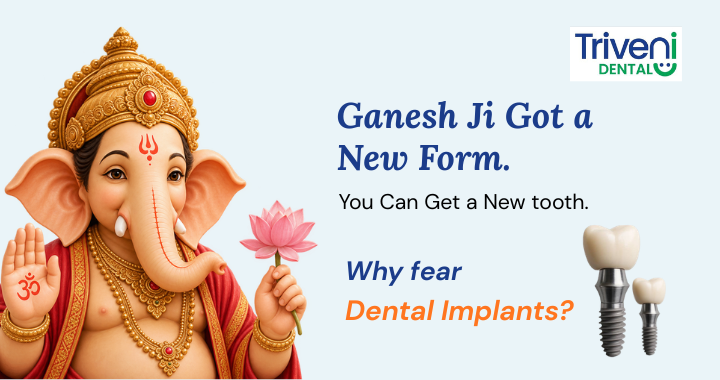
Hindu tradition is full of stories about loss, restoration and new beginnings. If Vighnaharta's (विघ्नहर्ता) story tells us that a new beginning is always possible, why fear a dental implant for a single tooth?
When it comes to replacing a missing tooth, many people hesitate. The fear of dental implants is common, and it is usually based on myths. Here is the story, and the facts behind modern implant dentistry.
A Story of Loss, Restoration and New Beginnings
According to Hindu tradition, Goddess Parvati created a young boy and asked him to guard her door while she bathed. When Lord Shiva returned, the boy, who did not know him, refused him entry. In the conflict that followed, Lord Shiva severed the boy's head.
Goddess Parvati was heartbroken. To console her, Lord Shiva restored the boy's life with the head of an elephant. He was reborn as Ganesha, blessed as Vighnaharta (विघ्नहर्ता), the remover of obstacles, and honoured to be worshipped first at every new beginning.
He is also called Ekadanta (एकदंत), "the one with a single tusk." Many traditions say he broke his own tusk to use as a pen and write the Mahabharata, turning what was lost into a tool of purpose.
The message is simple: loss is not the end, and restoration is possible. Modern dentistry offers its own kind of restoration. (This story is shared as faith-based inspiration, not as a medical comparison.)
Why do people fear Dental Implants?
Tooth loss affects how you eat, speak and smile, yet many people delay treatment for years. The most common reasons are:
a) Fear of pain: worry that surgery will be unbearable
b) Fear of the procedure: anxiety about anything involving the jawbone
c) Cost concerns: the belief that implants are unaffordable
d) Doubt: "Will it really work for me?"
These worries are natural, and each has a clear answer.
Dental Implant Myths vs. Facts
Myth: Dental Implants are painful.
Fact: Dental implant surgery is not painful as it is done under local anaesthesia and a very mild discomfort and pain is noticed by most of the patients which is manageable with suggested medication.
Myth: My body will not accept dental implants or reject it.
Fact: Rejection of dental implants is very rare as these are made up of titanium which is biocompatible and will easily fuse with your jawbone (osseointegration).
Myth: Dental Implants can be done only for older people.
Fact: These are suitable for adults of any age and not limited to any page people.
Myth: Dental Implants look fake.
Fact: This is not true implants are followed by placing a natural looking customised crown which has the colour of the same shade of your natural teeth.
What can you expect during dental implant surgery?
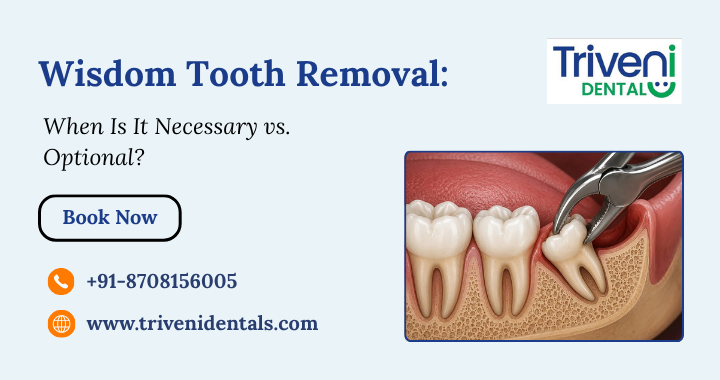
1. Consultation and Planning: Your dentist checks your mouth and uses x-rays or a 3D scan to plan your treatment.
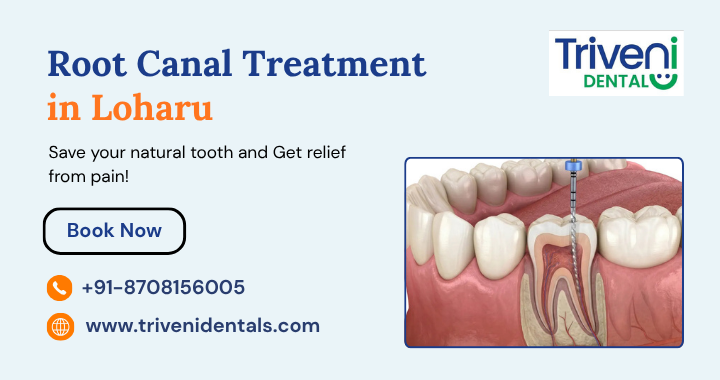
2. Implant Placement: A small titanium post is implanted into the jawbone, acting as a tooth root.
3. Healing: Over a few weeks or a month, the post gets attached to the bone.
4. Crown Placement: An abutment and a custom crown are placed on the implant.
The timeline varies from patient to patient.
Dental Implant Success Rate
The rate of success for dental implants may range up to about 95% or higher, depending on several factors.
These factors include health status, condition of the gums, smoking habits, diabetes control, oral hygiene, and the experience of the dentist.
Nevertheless, one must bear in mind that it is impossible to promise a full 100% success with any procedure; however, in general, dental implants can offer a reliable method of replacing the missing teeth if planned and executed in a proper manner.
Benefits of replacing a Missing Tooth
Below are some of the benefits you can expect of getting dental implants:
a) Improve your chewing and speaking ability
b) Maintain your jawbone structure
c) Neighbouring teeth will stay in place
d) Provide you natural look with enhanced confidence while smiling
e) Long lasting results while maintaining proper care
How to care for your implant?
Treat your dental implant like natural tooth and follow below tips to make it long lasting:
1. Avoid touching the implant area with your fingers or tongue.
2. Follow the dentist’s prescriptions and don’t miss any followup appointment.
3. Eat soft foods until the stitches are removed.
4. Avoid smoking or vaping for some weeks.
5. Brush and floss regularly.
Take the First Step with Triveni Dental
Ganesh Ji's story reminds us that new beginnings are possible, and that the first step is often the hardest. If you are not getting a dental implant to replace your missing tooth just out of fear, getting a consultation will clear all of your doubts.
At Triveni Dental, our experienced implantologist, Dr. Kapil Sharma (Implant Man of Haryana) has done 25k+ successful dental implants, will examine your teeth and honestly explain your treatment plan which will suit your budget.
Book your consultation today:
📞 Call/WhatsApp: +91-8708156005
Results vary from patient to patient. Please consult a qualified dentist for personalised advice.
Frequently Asked Questions
1. Is a dental implant painful?
Local anesthesia is given before the procedure starts, so you should not have any pain while it is happening. It is normal to feel slight pain after the treatment but this will pass soon enough.
2. How long can a dental implant last?
With appropriate dental care and regular visits to the dentist, the implant can stay in place for many years, or even decades.
3. How long does it all take?
The timing involved in the procedure is different for each patient, although it usually takes several months from the procedure itself to when the final crown is placed on.
4. How much does the dental implant cost in India?
Costs of the dental implant can differ based on the type of implant you are using, the facility and what additional procedures need to be done and thus, it is hard to estimate the price of treatment without an appointment.
5. What if I do not have enough bone?
In such a case, it is possible to perform bone grafting in order to reinforce the area before putting the implant. Your dentist will be able to assess your condition during the examination.